
Waymo of That
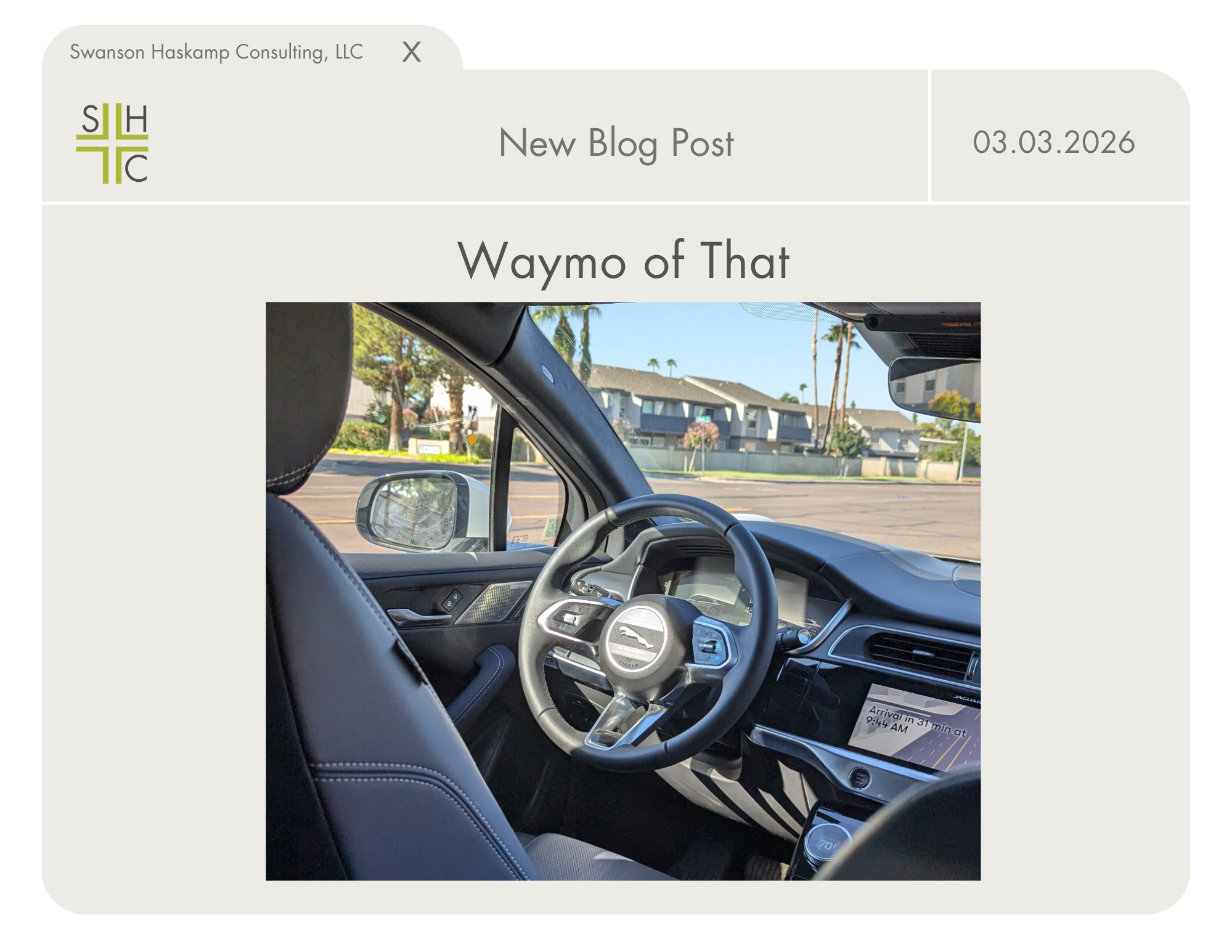
Last week, Waymo announced that it will be expanding its services to four new cities in the US. The autonomous ride-sharing company now operates in 10 major metro areas (Phoenix, LA, Austin, Miami - to name a few) and has plans to expand its reach further in the future. Waymo vehicles were recently spotted in Chicago, and the company has announced their plans to enter the ride-share game in Charlotte, Boston, and Sacramento.
Some communities have raised concerns about self-driving vehicles. In January, a Waymo navigated onto a rail line in the way of an oncoming train in Phoenix. Just earlier this week, a Waymo blocked an ambulance from reaching an emergency in Austin. These and other similar situations have raised questions about the safety of autonomous vehicles and whether they can adequately response to unpredictable situations. The rise of autonomous ride-sharing services also could pose an economic challenge to Americans who currently make their living by driving.
On the other hand, autonomous vehicles may help less mobile individuals live more independent lives, offering them an alternative to public transportation or traditional ride-sharing (which can be more costly than autonomous services). Furthermore, self-driving vehicles may help to reduce the number of serious or life-threatening road accidents. In 2025, Waymo reported 90% fewer serious injury crashes and 92% fewer pedestrian crashes compared to human drivers.
Whether you are for or against self-driving cars, it is unlikely that they will go away anytime soon. So, you can expect Waymo of that.